Recent engagements in Seville and at EU level have underscored the growing alignment between metropolitan research and the policy agenda on rural–urban linkages. Representing AEIDL and the Horizon Europe RURBANIVE project, Senior Expert Dr Serafin Pazos Vidal contributed to both discussions drawing on emerging RURBANIVE results, ensuring continuity between analytical evidence and policy-oriented dialogue.
At the DINAMET II conference hosted by the Universidad Pablo de Olavide with Italian, Polish, Spanish, Greek, Latin American and pan European speakers, exchanges focused on post-COVID population and mobility dynamics, spatial inequalities, and the evolving role of functional urban areas in European statistical and policy frameworks. Contributions from hosts Professors José María Feria, Ricardo Iglesias, Marian Huete, Juan Carlos García Palomares and others highlighted the increasing use of high-resolution data, GeoAI and new indicators to better understand urban systems. Discussions on social infrastructure, territorial equity and governance stressed the importance of institutional capacity, policy coordination and evidence-based approaches in addressing metropolitan challenges. Within this context, Serafin Pazos’s intervention addressed the future of EU urban policy and the limitations and opportunities of the post-2027 framework, emphasising the need to better integrate territorial realities, governance capacity and multi-level coordination into policy design.
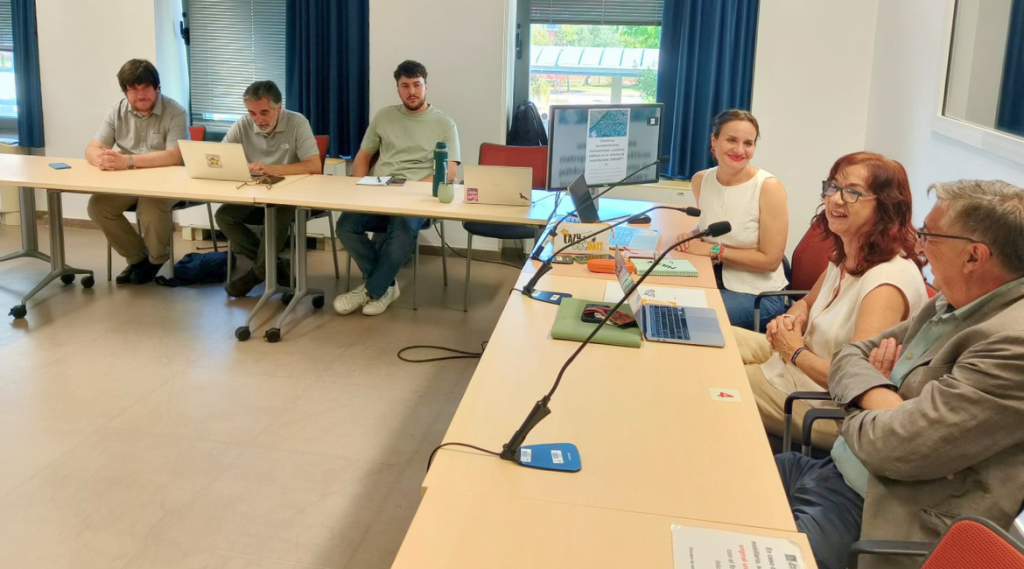
These insights fed directly into the RURBANIVE Forum – First Policy Recommendation Workshop, which marked the launch of a structured co-creation process to develop EU-level policy recommendations on rural–urban linkages.
Across both events, a consistent message emerged. Addressing Europe’s territorial challenges requires moving beyond urban–rural divides towards integrated, place-based approaches grounded in functional realities, data-driven insights and strong governance frameworks. The contribution of RURBANIVE, through its structured policy cycle and engagement with both research and policy communities, positions it as a key platform to bridge evidence and policymaking in this field.
Together, these engagements illustrate how ongoing Horizon Europe project work can connect cutting-edge metropolitan analysis with forward-looking EU policy development, ensuring that future territorial policies are both analytically robust and operationally relevant.